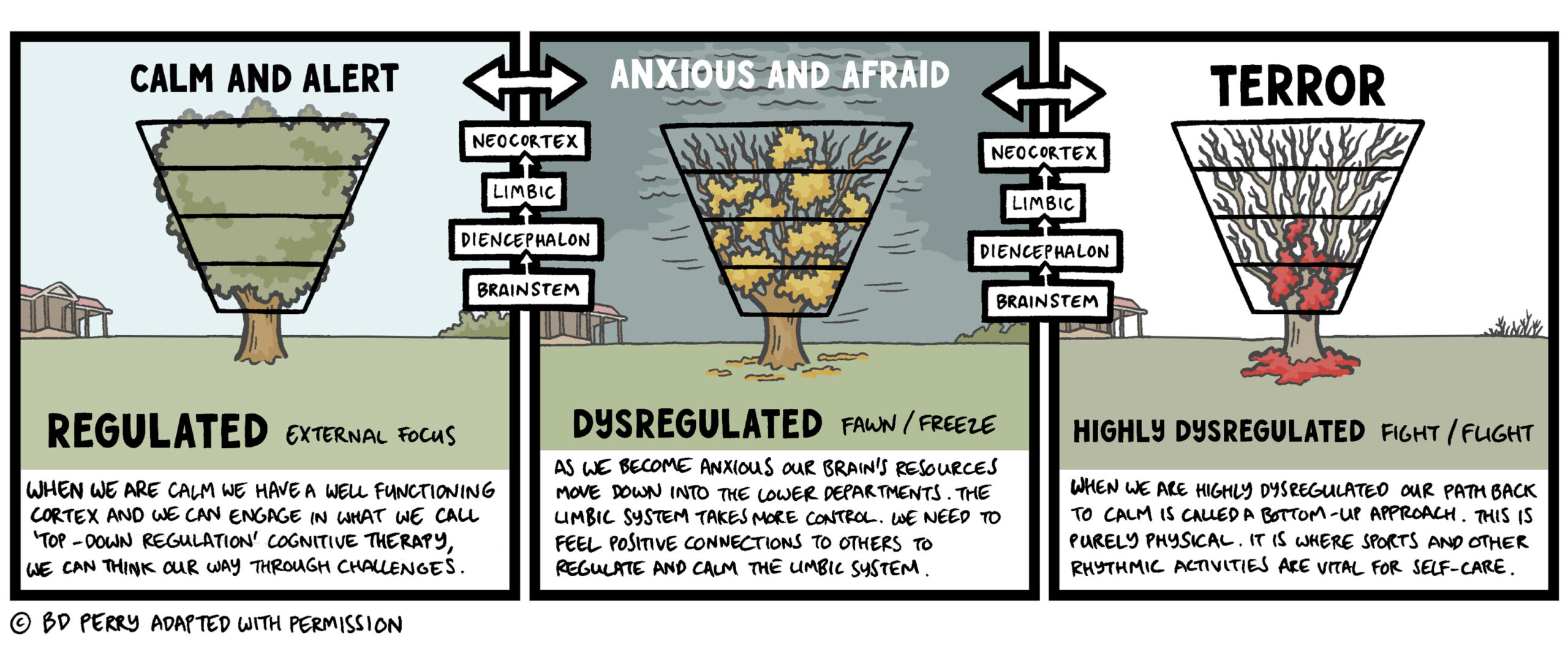
The part of the comic where I got a couple of questions are the Trees.
The trees show where our brains are most active based on how we’re feeling.
The emotions we feel arise based on our circumstance—the external and internal stressors we’re encountering.
How we feel, and what associated thoughts accompany those feelings, can be different for different folks depending on what you experienced growing up—what your auto-brain came to expect to encounter in this world.
Auto-brain works very fast, rapid-response style.
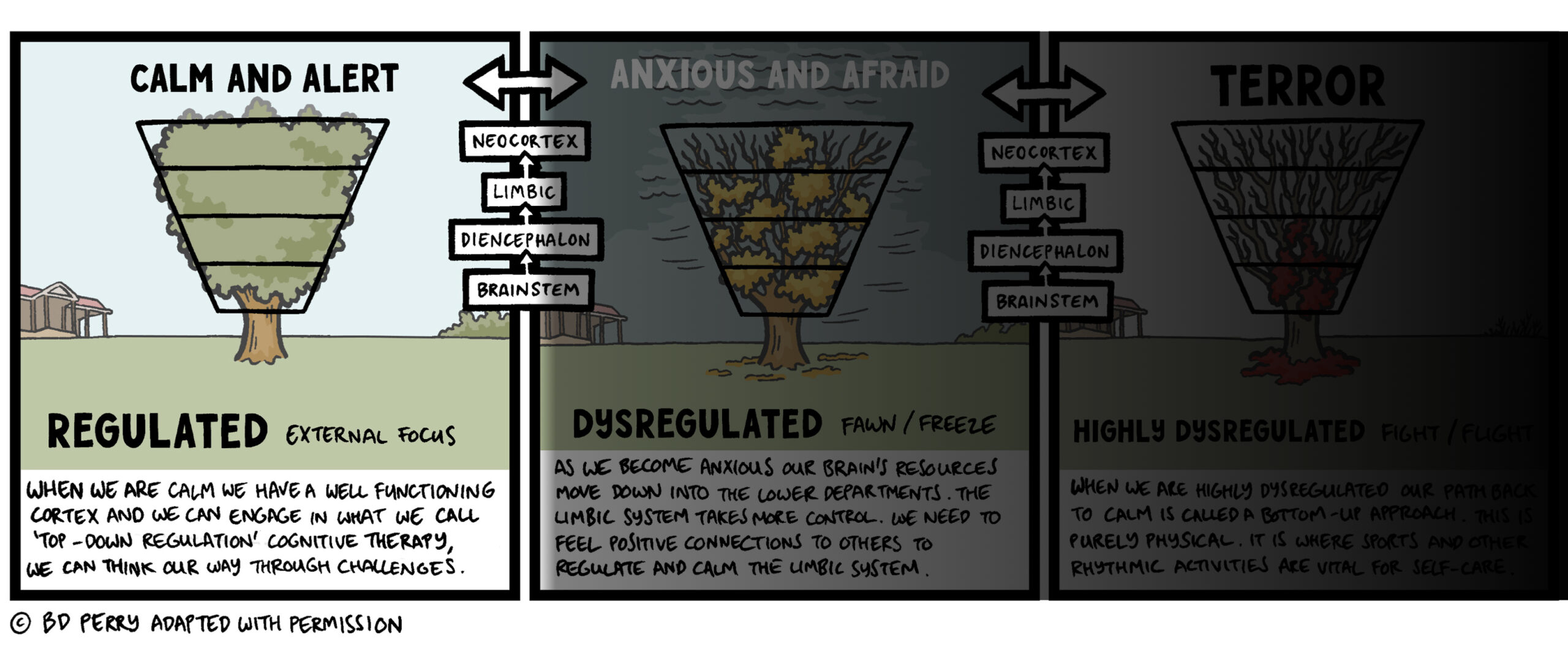
First—healthy green tree: When we are calm the auto-systems plus the Cortex* are active.
*Cortex = the rational, planning, creative part of the brain—the part that is most uniquely human. (Worth noting for the Neuroscience students out there, we’re using ‘Cortex and ‘Neocortex’ interchangeably here)
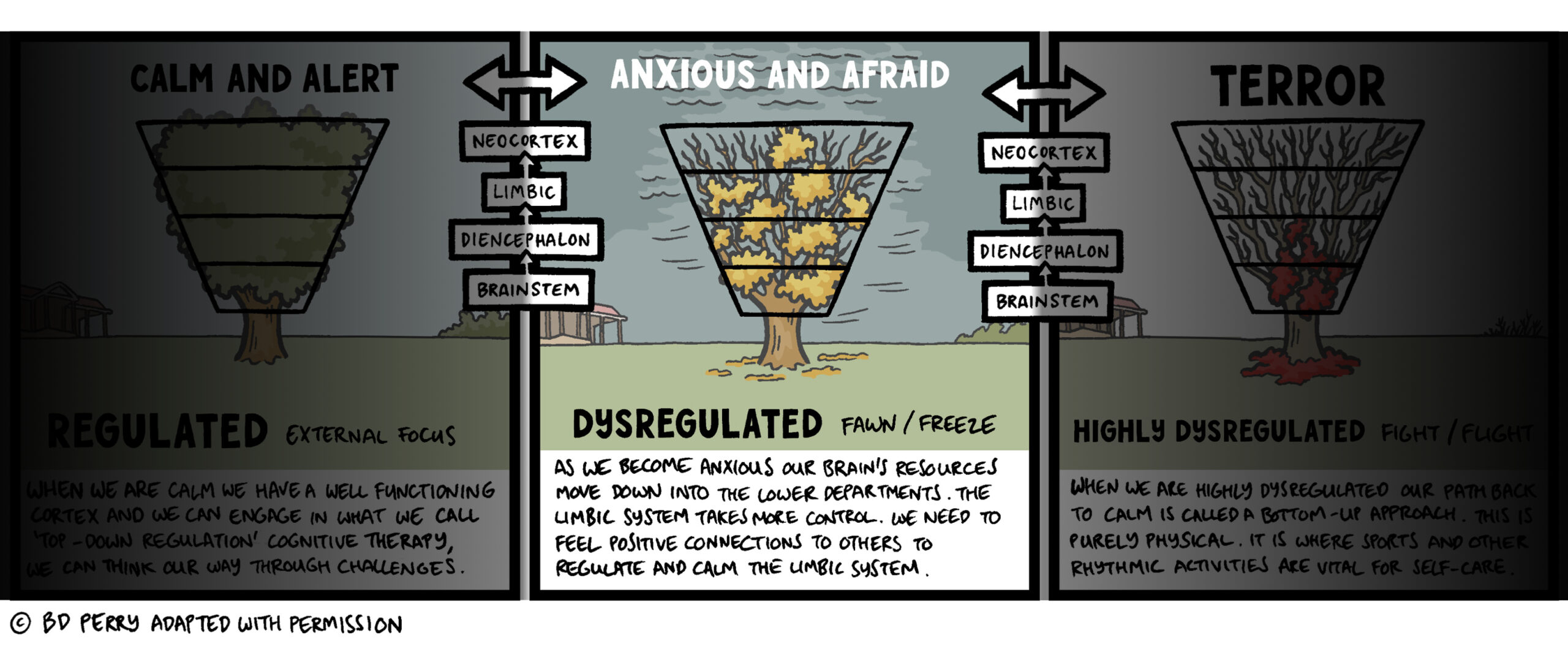
Scan to the second tree: Stress causes our brain to move energy (fueled by glucose) away from the Cortex towards more base-level fawn-freeze, fight-flight systems. When this response is triggered we have less access to our Cortex and are less able to think clearly. Our decision-making capabilities begin to suffer.
Here, in the Limbic System, to be regulated we need to feel connected to a trusted group. That need for connection boils down basic survival. Humans did not flourish as lone-wolves (neither did wolves for that matter) We did so in cooperating groups: tribes & villages.
To feel disconnected for any reason can—at its most extreme—trigger full existential terror. To be alone in the wilderness is not a recipe for success. It induces more fear. Depression itself drives a sense of alienation and disconnection. When this state is chronic the thought that we will never be useful again can arise and thoughts of suicide can emerge.
If we are experiencing thoughts of self-destruction, we in dangerous territory. Asking for and getting some help is vital. (more…)